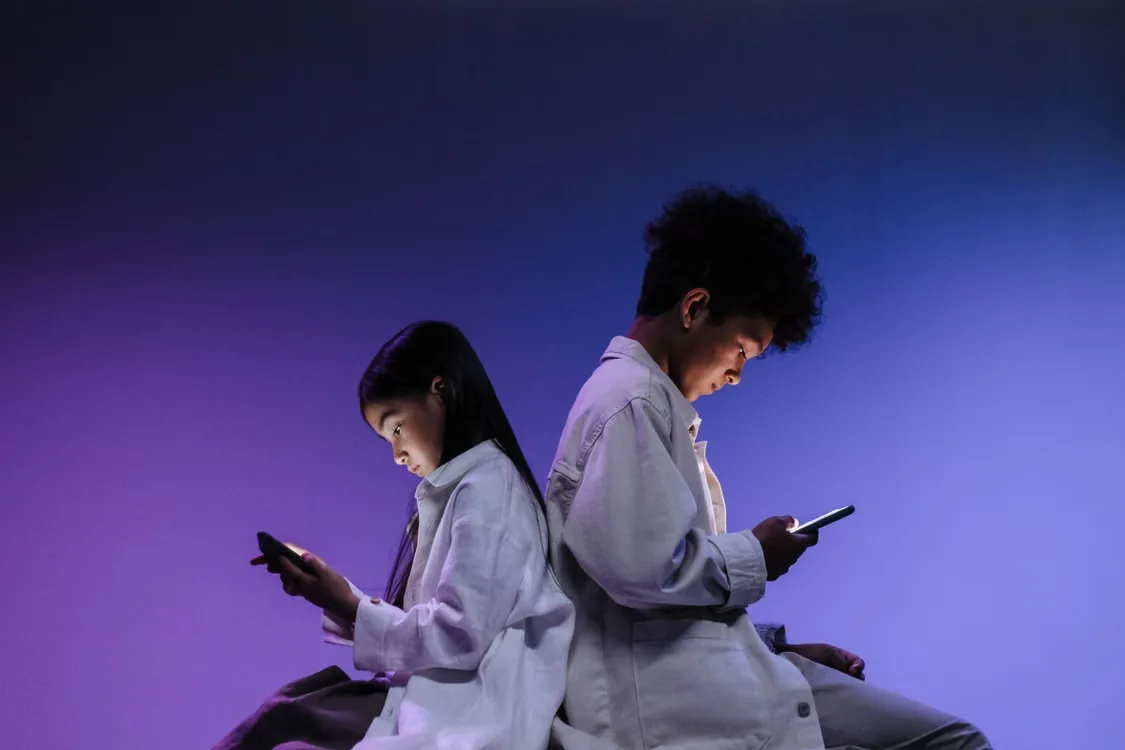
The debate about mobile phones in school has quickly become polarised. For some, banning them is an obvious response to distraction, loss of attention, cyberbullying and mental health difficulties. For others, removing phones seems simplistic, authoritarian or incompatible with digital education.
The available research does not fully support either position.
Recreational smartphone use during lessons is a real source of distraction. It can compete with attention, interrupt learning and make it harder to return to the task. But showing that phones can create problems is not the same as showing that a whole-day ban solves those problems.
When concrete school policies are evaluated, results are mixed. Some measures seem to modestly improve performance and make the school environment calmer; others greatly reduce phone use without clear changes in grades, attendance, cyberbullying or psychological wellbeing.
The most cautious conclusion is this: restricting recreational mobile phone use during learning activities makes sense, but it should not be presented as a miracle solution for complex educational and psychological problems.
The question is not simply ban or allow
One difficulty in this debate is that “mobile phone ban” can mean very different things. It may mean that the phone stays switched off in a bag during class, that it is handed to the teacher, that it remains in a locked pouch throughout the day, or that it can only be used for pedagogical, medical or accessibility reasons.
These differences matter. A written rule that is applied irregularly does not have the same effect as a clear, predictable policy supported by the organisation of the school. Research suggests that how the rule is applied may be as important as the rule itself.
It is also important to separate questions that are often mixed together:
- Does the phone distract during class?
- Does removing the phone reduce its use during the school day?
- Does that reduction improve grades?
- Does the ban improve mental health or eliminate cyberbullying?
The evidence is stronger for the first two questions. Recreational use during lessons tends to distract, and a well-applied policy tends to reduce use. The effects on grades, mental health and cyberbullying are more variable and depend heavily on context.
Attention, learning and distraction
The presence of a smartphone creates constant opportunities for attention to drift: notifications, messages, social media, videos, games and even the expectation of receiving a reply. Even a brief check can fragment concentration and make it harder to return fully to the task.
PISA 2022 data, analysed by the OECD, show that many students report distraction caused by digital devices in class. Students who feel more distracted also tend to have poorer results. This association does not prove a simple causal relationship, but it is consistent with what teachers, students and families observe in everyday school life.
At the same time, technology is not inherently harmful. Digital use can be useful when it has a clear pedagogical purpose, is moderate, guided by the teacher and integrated into a concrete activity. The larger problem seems to be recreational, constant or hard-to-control use, especially when it competes with tasks that require sustained attention.
For this reason, a lesson without phones may run better without necessarily producing major changes in final grades. Grades also depend on teaching quality, sleep, motivation, family support, learning difficulties, mental health and many other factors.
When phones are actually removed
Stricter policies generally reduce access to devices during the school day. This may reduce interruptions, ease part of classroom management and create more space for face-to-face interaction.
However, recent studies do not show uniform results. A large United States analysis of locked pouches found a strong reduction in phone use, but average effects that were small or close to zero for grades, attendance and cyberbullying, at least in the first years. Some contexts also showed initial adaptation difficulties, including more disciplinary incidents.
Other studies found clearer benefits. In Brazil, some restrictions were associated with improvements in standardised tests, especially in schools that previously had less consistent rules. In Norway, a quasi-experimental study found positive effects on some indicators, particularly among girls and students from more disadvantaged backgrounds.
This diversity of findings does not mean that research is useless. It means that the question has to be more careful: what type of restriction, applied to which ages, in what school, with what alternatives, consequences and follow-up?
Grades: possible benefits, but usually modest
When academic gains appear, they tend to be modest and uneven. They may matter more for students who previously used the phone more, had greater difficulty sustaining attention or had fewer resources to compensate for distraction.
This is important because a small average improvement may hide useful effects for some groups and almost no effect for others. In the same way, an apparently neutral rule can generate more disciplinary sanctions for some students if it is applied rigidly, unevenly or without being well understood.
A sensible policy should therefore not only ask whether it “works” on average. It should monitor what happens across different ages, school years, social groups, students with specific needs and young people with a greater disciplinary history.
Mental health and cyberbullying: the evidence is more uncertain
The relationship between smartphones, social media and adolescent mental health is complex. Compulsive use, social comparison, exposure to harmful content, sleep disruption and cyberbullying can contribute to psychological distress. But blocking access to the phone for a few hours a day does not, by itself, remove these dynamics.
Some recent studies did not find significant differences in anxiety, depression or wellbeing between schools with more restrictive and less restrictive policies. The factor most associated with worse indicators appeared to be total phone and social media use, both inside and outside school.
Caution is also needed with cyberbullying. A ban may reduce photographs, messages, recordings or posts during school hours. That matters. But many digital conflicts continue after school, at night and at weekends. They may begin online and enter school the next day, or begin at school and continue on platforms.
A policy against cyberbullying therefore needs more than removing devices: safe reporting mechanisms, early intervention, digital literacy, socio-emotional education, work with families, accountability for aggressors and support for victims.
The Portuguese context
In Portugal, rules on smartphones in schools have been reinforced. The national discussion follows an international trend: according to UNESCO, the number of education systems with national bans or restrictions has increased rapidly in recent years.
The Portuguese PLANAPP report on implementation during the 2025/2026 school year found reports of high compliance and perceived improvements, mainly in socialisation and, to a lesser extent, discipline. These data are relevant because they capture the experience of those who manage schools day by day.
They should also be interpreted with caution. The report is based mainly on the perceptions of school leaders and staff, not on direct measures of mental health, individual academic results, objective device use or bullying episodes confirmed by multiple sources.
In other words, Portuguese data help us understand feasibility and the perceived school environment, but they do not prove, by themselves, that bans increased grades or reduced anxiety, depression or cyberbullying.
What seems most sensible
Taking the evidence as a whole, some practical ideas seem reasonable.
During lessons, recreational use should be absent by default. The phone should be out of sight and should not compete with the attention needed to learn. Pedagogical use may exist, but it should have a clear purpose and be guided by the teacher.
For younger students, a simple and uniform rule may be easier to understand and apply. For older adolescents, a whole-day restriction may have organisational and social advantages, but requires greater care: student participation, alternatives during breaks, proportionate consequences and attention to adaptation effects.
Exceptions should be clear. Health, accessibility, translation, special educational needs, particular family circumstances or justified pedagogical activities require defined procedures. A firm rule can, and should, also be inclusive.
Removing the phone without offering alternatives may simply turn screen-free time into boredom, opposition or anxiety. Spaces for socialising, reading, games, sport, clubs and break-time activities are not accessories; they are part of the quality of the policy.
Finally, any restriction should be accompanied by digital literacy. Young people need to learn to manage notifications, privacy, algorithms, social comparison, pressure to be permanently available, misinformation and night-time use. School can protect moments of attention, but a healthy relationship with technology is also built outside school.
Conclusion
Research allows us to move away from two extreme ideas.
The first is that mobile phones are not a relevant school problem. They are. Recreational use during lessons competes with attention and may harm learning.
The second is that a ban will automatically solve academic failure, anxiety, depression, lack of socialisation or cyberbullying. Recent evidence does not support that promise.
The most faithful reading seems to be this: restricting recreational mobile phone use during lessons is sensible and probably beneficial for the learning environment. A whole-day ban may bring advantages in some contexts, but its effects on grades and mental health are variable and usually modest.
Success depends less on the word “ban” and more on consistency, students' age, the way the rule is applied, the alternatives created and the digital education that accompanies it.
The problems associated with digital life do not begin at the school gate and do not end when the bell rings. School restrictions can protect important periods of attention, relationship and learning. But only a broader strategy, involving school, family, health, digital platforms and young people themselves, can promote a truly healthy relationship with technology.
Selected references
Allcott, H., Baron, E. J., Dee, T., Duckworth, A. L., Gentzkow, M., & Jacob, B. (2026). The Effects of School Phone Bans: National Evidence from Lockable Pouches. NBER Working Paper no. 35132. NBER
Böttger, T., et al. (2024). To Ban or Not to Ban? A Rapid Review on the Impact of Smartphone Bans in Schools on Social Well-Being and Academic Performance. Education Sciences, 14(8), 906. MDPI
Goodyear, V. A., et al. (2025). School phone policies and their association with mental wellbeing, phone use, and social media use (SMART Schools). The Lancet Regional Health - Europe. PubMed Central
OECD. (2024). Managing Screen Time: How to Protect and Equip Students Against Distraction. OECD
PLANAPP. (2026). Acompanhamento do efeito das regras e recomendações sobre o uso de smartphones nas escolas. PLANAPP
UNESCO. (2026). Phone bans in schools are spreading worldwide as the policy debate rages on. UNESCO
Vanluydt, E., et al. (2026). Disconnect to Reconnect: How Variations between Types of Smartphone Bans Influence Students' Well-being and Social Connectedness in Dutch Secondary Education. Journal of Youth and Adolescence. Springer