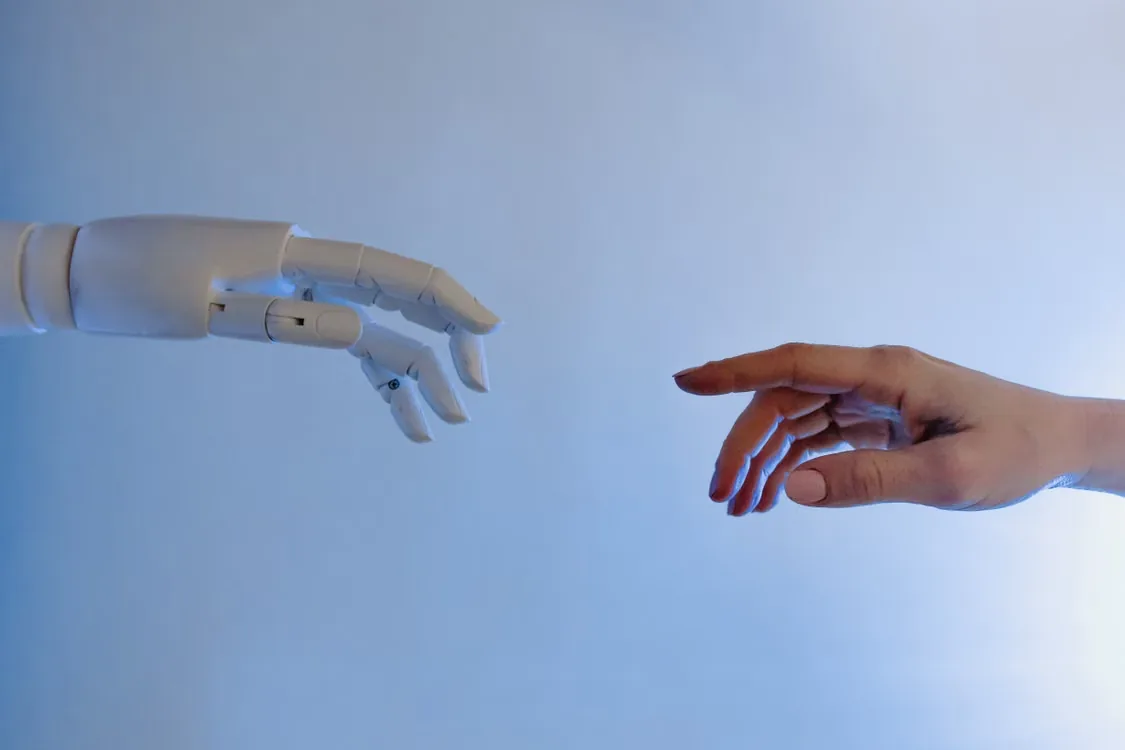
Artificial intelligence entered everyday life very quickly. We use it to look for information, study, work, write or simply clarify a question. It was probably inevitable that people would also begin to use it to talk about personal problems.
For some people, ChatGPT and other chatbots have become a space where they can talk about anxiety, relationships, loneliness, difficulties at work or simply a day that went badly. Part of the appeal is easy to understand: they are always available, they answer immediately, and we may tell them things we would find difficult to say to another person.
But what happens when we start using these tools as if they were a psychologist?
The question has become common enough to draw the attention of researchers and health organisations. The American Psychological Association has warned about the growing use of artificial intelligence chatbots as psychological support, especially when these tools were not created or evaluated for that purpose. More recently, the World Health Organization has also highlighted the need to develop and use these tools responsibly in mental health.
The research that is beginning to emerge is interesting. But it also shows that we need to distinguish between very different things.
Can talking to AI help?
In some situations, yes.
Writing about what we are feeling can, in itself, help organise thoughts. An AI system can ask questions, explain what anxiety is, suggest simple relaxation strategies or help someone prepare what they would like to discuss in a consultation.
It may even be easier to begin by writing to a machine. A person who feels ashamed of a particular problem, for example, may feel less fear of being judged. And someone who is awake at three in the morning does not need to wait until the next day to receive a response.
This is not necessarily bad. The problem begins when the feeling of having had a good conversation is confused with receiving mental health care.
Current AI systems are particularly good at producing convincing language. They can respond in an empathic tone, remember what has been said earlier and adapt their response to the person speaking with them. All of this can create an experience surprisingly close to a human conversation.
But seeming to understand a person and clinically understanding a person are different things.
Does therapy with artificial intelligence work?
Here, an important distinction is needed.
One thing is to open ChatGPT, Gemini or another general-purpose chatbot and ask it to be your therapist. It is quite another to use a system developed specifically for mental health intervention, built with the involvement of professionals and then studied in clinical research.
Some of these tools have shown interesting results.
One of the most recent examples is Therabot, developed by researchers at Dartmouth College. In a clinical trial published in 2025, people with symptoms of depression, anxiety or eating disorders used this chatbot for several weeks. Participants showed important reductions in some symptoms, and many reported developing a trusting relationship with the system.
This result deserves attention. It suggests that artificial intelligence may eventually have a place in mental health care.
But the study did not show that talking to any AI is equivalent to psychotherapy. Therabot was created precisely for this purpose, with input from mental health professionals and specific safety mechanisms. Also, as often happens in this area, we still know relatively little about the effects of prolonged use of these tools.
Other studies and reviews have found positive results, especially for anxiety and depression. Even so, many studies are small, relatively short and exclude people with more severe problems.
We are therefore looking at a promising field, but still a very recent one.
The problem with an AI that always agrees with us
There is a particular difficulty that deserves attention.
When someone tells us about a problem, the most useful response is not always to agree with that person's interpretation of the situation.
Imagine someone who is convinced that all their colleagues talk about them whenever they leave the room. A psychologist does not only have to recognise that this experience is causing distress. They also need to understand what is happening, explore other explanations and assess whether that belief may be part of a broader problem.
A chatbot may not make this distinction very well.
Language models were developed to maintain helpful and pleasant conversations, and they can become overly agreeable with the user. This is particularly problematic in the presence of persecutory ideas, manic states or highly distorted interpretations of reality.
Something similar can happen, in a less obvious way, with anxiety.
A person worried about their health may repeatedly ask whether a symptom is dangerous. Someone insecure in a relationship may constantly seek confirmation that their partner will not leave them. The AI's response may reassure them for a few minutes. But if every doubt leads back to the chatbot, the tool may end up feeding the anxiety cycle itself.
What makes us feel better in the moment is not always what helps us in the long term.
What if there is a crisis?
This is probably the most important limit.
Current chatbots do not always respond adequately to self-harm, suicidal ideation, psychosis, mania or other states of serious vulnerability.
A study published in 2026 examined precisely how different language models responded to psychological crisis situations. The results showed considerable differences between systems, with particular difficulties when risk signals were less explicit.
In real life, this is exactly how many situations appear. A person may not write directly, “I want to kill myself”. They may say they are tired of everything, that others would be better off without them, or that they no longer see any way out.
A professional can ask additional questions, assess risk and decide whether other people or services need to be involved. A chatbot may misread what it is receiving.
For this reason, in a crisis, AI should not be the only support available.
Can we form a relationship with a chatbot?
This may be one of the most interesting questions in the whole discussion.
People form relationships with things that respond socially. We give names to objects, talk to animals and feel attached to characters we know do not exist. It is not especially surprising that we can develop some kind of emotional bond with a system that talks to us, remembers what we said and responds in an apparently interested way.
In the Therabot study, for example, many participants reported a relationship with the chatbot that was comparable, on some measures, to the therapeutic relationship observed in traditional care.
That can be useful. Feeling understood makes it easier to open up and may increase the wish to continue using an intervention.
But it also raises a new problem.
An AI is available whenever we want. It does not get tired, has no needs of its own, does not become irritated and adapts much of the conversation to us. Human relationships do not work like that.
If someone gradually begins to prefer the relationship with the chatbot to relationships with other people, uses it to make decisions, or feels that it is the only entity that truly understands them, it is worth paying attention to what is happening.
A use that began by reducing loneliness may, in some cases, end up making isolation easier.
What about young people?
This question becomes even more important with adolescents.
A study published in 2026 in JAMA Pediatrics found substantial use of chatbots for mental health advice among adolescents and young adults in the United States. Many said they found the responses helpful, and not all had told other people they were using AI in this way.
We cannot assume that the same numbers apply to Portugal. But we can take an important point from this: for some young people, these conversations are already part of the way they seek help.
Banning or ridiculing this use probably does not solve the problem. It may be more useful to ask what they are looking for in these systems, what the systems tell them, and whether there is anything they feel unable to tell a person.
If an adolescent feels that they can only talk about a particular suffering with a chatbot, perhaps the most important issue is not the chatbot. It is understanding why they have not yet found a person with whom they feel safe enough to speak.
A private conversation is not necessarily confidential
There is another aspect we sometimes forget when talking to these tools.
It is easy to feel that a conversation on a phone or computer is private. But the confidentiality of a psychological consultation has a professional, ethical and legal framework that is not equivalent to a conversation with a technology platform.
Policies vary between companies and services, and they may also change over time. Before writing very personal information about health, sexuality, relationships, family, work or other people, it is worth understanding what happens to that data.
A good rule is not to provide more identifiable information than necessary.
So what can it be useful for?
We do not need to choose between seeing AI as a threat and treating it as a psychologist available twenty-four hours a day.
There is a very large space between those two positions.
It can be useful for understanding a psychological concept, organising what we are feeling, keeping a journal, preparing a difficult conversation or thinking about questions we want to bring to a consultation. During a therapeutic process, some people may also use it to remember or organise what they have worked on.
What deserves more caution is asking a chatbot to make a diagnosis, deciding to change medication based on what it says, using it as the only response to a crisis, or handing over important life decisions to it.
It can also be useful to ask ourselves a simple question: after speaking with AI, am I more able to return to my life, or do I feel the need to keep talking to it?
That difference can tell us a lot about how we are using it.
Will AI replace psychologists?
It is difficult to predict how far these technologies will go. It is entirely possible that artificial intelligence tools will come to play an important role in mental health, including prevention, symptom monitoring or support between consultations.
That does not necessarily mean replacing professionals.
Psychotherapy involves technical knowledge, but it also involves a relationship between two people. The psychologist observes changes over time, notices contradictions, knows the person's context, asks questions that are not always comfortable and takes responsibility for the work being done.
Sometimes, part of the therapeutic work happens precisely because there is another person on the other side.
Research on artificial intelligence and psychotherapy is still at an early stage. There are results interesting enough for us not to dismiss these tools, but there are also enough reasons not to attribute to them capacities they have not yet demonstrated.
Perhaps the most interesting use of AI in mental health will be less spectacular than the idea of an “artificial psychologist”: tools that support people and professionals, make some resources more accessible and complement what we already do.
For now, if a conversation with AI helps someone understand better what they feel, or even take the first step towards seeking help, it may have served an important function.
We just should not confuse that first step with the whole path.
Frequently asked questions
Can I use ChatGPT as a psychologist?
You can use it to talk about what you feel, look for information or organise thoughts. But ChatGPT is a general-purpose chatbot and does not replace assessment or follow-up by a professional.
Does AI therapy work?
Some tools developed specifically for mental health have shown promising results, especially for anxiety and depression. There is still little information about long-term use, and these findings cannot be generalised to any chatbot.
Is it dangerous to talk about my problems with AI?
Not necessarily. It depends on the problem and on how you use the tool. The risk increases when AI becomes the only source of support, is used in a crisis, or begins to replace necessary relationships and care.
Can I use AI while I am in psychotherapy?
In principle, yes. It may help, for example, to organise ideas or questions between sessions. If AI use plays an important role in how you deal with your difficulties, it may also be useful to talk about it with your psychologist.
When should I seek help from a person?
When distress is intense or persistent, significantly interferes with daily life, there is loss of control, or thoughts of self-harm or suicide, major changes in the perception of reality or other signs of crisis appear. In those situations, a conversation with AI should not replace professional help or emergency services.
References
American Psychological Association. (2025). Health advisory: Use of generative AI chatbots and wellness applications for mental health. APA
American Psychological Association. (2026). Your patients are using AI. Here's how to talk with them about it. APA
Arnaiz-Rodriguez, A., et al. (2026). Between Help and Harm: An Evaluation Study of Mental Health Crisis Handling by Large Language Models. JMIR Mental Health, 13, e88435. JMIR Mental Health
Heinz, M. V., et al. (2025). Randomized Trial of a Generative AI Chatbot for Mental Health Treatment. NEJM AI, 2(4). NEJM AI
McBain, R. K., et al. (2026). AI Chatbot Use and Disclosure for Mental Health Among US Adolescents and Young Adults. JAMA Pediatrics. JAMA Pediatrics
World Health Organization. (2026). Towards responsible AI for mental health and well-being: experts chart a way forward. WHO