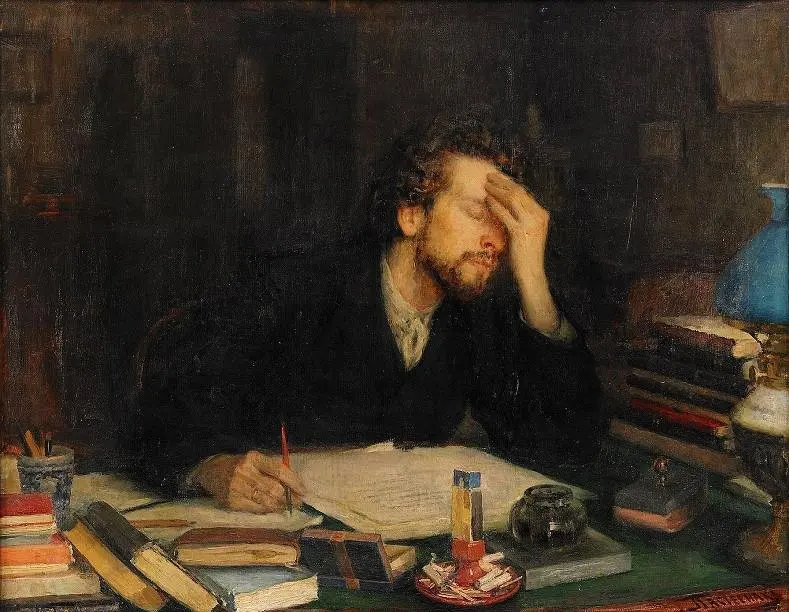
I am not exactly a stranger to procrastination. On the contrary, it has accompanied me at different moments in my life. It was never just an abstract idea I read about in books: it was the dissertation I kept putting off, or the job opportunity I left unanswered. I postponed choosing a final topic, writing an email or sitting down to work. And when I finally did sit down, I would often find something apparently urgent to do instead.
Over time, this made something clear that research has also shown: procrastination is rarely just a failure of discipline. It often involves discomfort, fear of failure, difficulty getting started and being too hard on ourselves when we struggle.[1]
It is easy to call this laziness, lack of discipline or weak willpower. But psychology describes something more interesting. Procrastination is not simply leaving something for later; it is voluntarily delaying an action we intended to do, despite expecting that the delay may harm us. This distinction matters, because not every delay is procrastination. Choosing to rest when exhausted, waiting for necessary information or reorganising priorities because of a real urgency may be sensible. Procrastination begins when there is a conflict between what we consider important to do and what we actually end up doing.[2]
Why do we put off what we know we need to do?
Imagine that you need to start a presentation, study for an exam or write a difficult section of a report. Before there is any action, there is often a feeling: the task seems vague, long, boring, threatening or too demanding. Perhaps there is fear of not doing it well, irritation at having to do it, doubt about the first step or a kind of heaviness that is hard to name.
At that moment, opening the phone, tidying the desk, reading the news or answering a message may feel almost automatic. And something important happens: the discomfort decreases. Not because the problem has disappeared, but because we have temporarily stopped being in contact with it.
This idea has become central in contemporary research. Fuschia Sirois and Timothy Pychyl proposed that, in many situations, procrastination works as an attempt to regulate mood in the short term. When a task brings up anxiety, frustration, boredom, insecurity or shame, moving away from it offers an immediate reward: we feel better now. The cost comes later.[3]
A recognisable cycle then forms: the task creates discomfort; postponement brings momentary relief; the deadline approaches; guilt, anxiety and self-criticism appear; and the task becomes even more unpleasant. People who procrastinate often do not need this cycle explained to them. They usually know it too well, which may be one reason it is so easily confused with simple laziness.
Procrastination is not the same as laziness
In everyday language, procrastination and laziness are often treated as almost the same thing. That equivalence is not very helpful. A person can procrastinate while being extremely busy. They may clean the house, organise files, answer messages, research more information than they need or complete several secondary tasks. The problem is not the absence of activity; it is avoiding precisely the task they intended to do.
It is also important not to confuse procrastination with tiredness. When someone is exhausted, sleeping badly for weeks or going through a period of major overload, delaying a demanding task may be a realistic response to the body’s limits. In those cases, insisting only on discipline may add guilt to a problem that perhaps requires rest, boundaries or a deeper reorganisation of life.
Something similar can happen with anxiety, depression, burnout or attention difficulties. A person may postpone a phone call because anticipating the conversation makes them anxious. Another may avoid a project because they are convinced it will never be good enough. Someone else may find it so hard to organise the sequence of steps that beginning feels impossible. The final behaviour looks similar — the task does not move forward — but the processes that maintain it may be quite different. That is one reason why universal solutions for procrastination often fail: the same advice may help one person and be useless to another, because they are not avoiding the same thing.
Perfectionism, fear of failure and the imperfect first draft
Perfectionism is one of the most subtle ways of turning a task into a threat. At first glance, it might seem like the opposite of procrastination: if someone wants to do everything well, they should start early and work more. In practice, when the standard for beginning is too high, any beginning becomes threatening.
Writing stops meaning putting provisional ideas on paper and starts meaning producing a good introduction. Choosing a topic stops being a working decision and begins to feel like a decision about our value, intelligence or future. Asking for help stops being a way of moving forward and starts to feel like evidence of incompetence. Under those conditions, postponing temporarily protects us from the possibility of failure.
There is also a hidden psychological gain. If we leave something until the last night and the result is not good, we can think that it would have gone better with more time. We never truly test what we might have been capable of if we had started earlier. Postponement, paradoxically, preserves a possibility: perhaps I could have done it, if things had been different.
But the cost is high. The task becomes associated with urgency, shame and exhaustion. Instead of an imperfect first version that could be worked on, we remain attached to the fantasy of a final version that should be born ready. For many people, starting improves when they accept a simple and not very romantic truth: the first version is not there to be good; it is there to exist.
Guilt can keep the problem going
One of the ironies of procrastination is that what we do to reduce discomfort often ends up creating more discomfort. After postponing, there is not only a task left undone. There is also a story about ourselves: “again”, “I am incapable”, “I never learn”, “everyone else manages except me”.
This inner dialogue may look like an attempt at motivation. Very often it has the opposite effect. If the task was already unpleasant, adding shame and self-criticism increases the wish to escape it. The person does not only avoid the work; they also avoid the feeling of facing yet another supposed proof of their incapacity.
This is where self-compassion can be misunderstood. It does not mean saying that there are no consequences, nor turning everything into an excuse. It means creating conditions for action. There is a huge difference between thinking “I postponed again; I need to understand what happened and what the next step is” and thinking “I am a failure”. The first formulation still leaves room for movement. The second closes it down.[4]
Why does breaking tasks down help?
Many tasks we procrastinate on are too vague. “Sort my life out”, “study”, “deal with bureaucracy”, “reply to that email” or “resolve that issue” are large, heavy and not very actionable expressions. The brain looks at them and finds too much uncertainty. It does not know where to start, how long it will take, what the first step is or when it can consider that progress has been made.
Breaking tasks down is not just a productivity trick. It is a way of reducing uncertainty and lowering the psychological cost of beginning. “Write a report” can be paralysing. “Open the document and write ten bad lines about the problem” is already a concrete action. “Deal with the application” can feel enormous. “Reply to one email with a simple first version” is more manageable.
The same applies to creating external structure. Setting working hours, agreeing on intermediate deadlines, working alongside someone, removing the phone from the desk or choosing a specific place can help because it reduces the number of decisions we need to make when the wish to avoid appears. A lack of structure gives freedom, but it also makes it easier to delay without anything seeming to happen that day. Structure helps precisely because it makes progress more visible.
Popular techniques such as short lists, time blocks or timers can be useful. But it is worth not turning them into magic solutions. A timer does not, by itself, resolve fear of failure. A task app does not treat depression. A well-made list does not replace rest when someone is exhausted. Tools help when they serve a real understanding of the problem.
When procrastination becomes clinically relevant
We all procrastinate occasionally. There is no standalone clinical diagnosis called “procrastination disorder”, and it would not be useful to turn every delay into a psychological problem. The most important question is impact.
Procrastination deserves more attention when it becomes persistent and begins to interfere with important areas of life: studies, work, health, finances, relationships, sleep or basic daily tasks. When deadlines are repeatedly missed, nights are spent trying to recover lost time, opportunities are lost, conflict with other people increases or there is a constant feeling of guilt and incapacity, we are no longer dealing only with an inconvenient habit.
Research has found associations between procrastination, anxiety, depression, stress, poorer sleep and lower wellbeing. This does not mean that procrastination necessarily causes depression, nor that an anxious person will inevitably procrastinate. Many relationships may work in both directions. Anxiety can increase avoidance; avoidance can increase anxiety. Tiredness can make it harder to begin; delay can force someone to work late and worsen tiredness.[5]
So when procrastination takes up too much space, it may be useful to ask not only “how do I stop putting things off?”, but “what is this postponement protecting me from, helping me avoid or revealing?”. Sometimes the answer will be organisation. At other times it will be fear, perfectionism, exhaustion, attention, sadness or being too hard on oneself.
What can help?
We do not necessarily need to wait for motivation in order to begin. Very often, motivation appears after the first contact with the task, not before. Waiting for the ideal willingness can be one of the most elegant ways of remaining stuck.
A simple question is often more useful: what is the smallest concrete action I can take now? Not “write the article”, but open the file and write a provisional paragraph. Not “organise my finances”, but find one document. Not “study everything”, but read two pages and underline three ideas. The action needs to be small enough to reduce the threat and specific enough to begin.
It can also help to notice the moment just before postponement. When we find ourselves opening another app, getting up from the chair or inventing an urgency, we can ask: what was I feeling before I did this? Boredom, doubt, irritation, fear of failure, confusion, shame? This question changes the nature of the problem. Instead of an abstract war against lack of discipline, we begin to understand what we are trying to avoid.
The most studied psychological approaches for procrastination are mostly based on cognitive-behavioural principles. They may involve breaking tasks down, setting concrete goals, identifying patterns of avoidance, working with unrealistic beliefs, reducing distractions, dealing with perfectionism and learning to tolerate the discomfort of beginning. [6]
A meta-analysis of 24 studies found that procrastination decreased after interventions, with more favourable results for cognitive-behavioural approaches. Another review, focusing on randomised trials, found a small average benefit and substantial differences between studies. There are therefore reasons to seek help, but no single technique works in the same way for everyone: many samples were small, and study quality varied.[7][8]
Perhaps the problem is not lack of discipline
Instead of “why do I have no willpower?”, it may be more useful to ask: “what makes it so difficult to begin this task?”. The answer can open different paths. Sometimes we need to divide the work more clearly; sometimes to ask for help or accept an imperfect first version; and sometimes to rest, reduce self-criticism or look at broader emotional difficulties.
Moving forward often begins by turning an overwhelming task into a sequence of imperfect steps, small enough to exist. For each person, the path will be different. But the question is often similar: what needs to change so that beginning feels less threatening?
When procrastination becomes persistent, painful or disabling, seeking psychological support may make sense. Not necessarily to learn how to produce more, but to understand why beginning has become so difficult.
References
- Mahy, C. E. V., Munakata, Y., & Miyake, A. (2024). Mutual implications of procrastination research in adults and children for theory and intervention. Nature Reviews Psychology, 3, 589–605.
- Steel, P. (2007). The nature of procrastination: A meta-analytic and theoretical review of quintessential self-regulatory failure. Psychological Bulletin, 133(1), 65–94.
- Sirois, F. M., & Pychyl, T. A. (2013). Procrastination and the priority of short-term mood regulation: Consequences for future self. Social and Personality Psychology Compass, 7(2), 115–127.
- Sirois, F. M. (2014). Procrastination and stress: Exploring the role of self-compassion. Self and Identity, 13(2), 128–145.
- Nie, Y., Wang, W., Zhou, F., Wang, T., Li, S., Liu, C., & Gao, J. (2025). The association between procrastination and negative emotions in healthy individuals: A systematic review and meta-analysis. Frontiers in Psychiatry, 16, 1624094.
- Rozental, A., Forsell, E., Svensson, A., Andersson, G., & Carlbring, P. (2015). Internet-based cognitive-behavior therapy for procrastination: A randomized controlled trial. Journal of Consulting and Clinical Psychology, 83(4), 808–824.
- van Eerde, W., & Klingsieck, K. B. (2018). Overcoming procrastination? A meta-analysis of intervention studies. Educational Research Review, 25, 73–85.
- Rozental, A., Bennett, S., Forsström, D., Ebert, D. D., Shafran, R., Andersson, G., & Carlbring, P. (2018). Targeting procrastination using psychological treatments: A systematic review and meta-analysis. Frontiers in Psychology, 9, 1588.
Revised 27 September 2026.