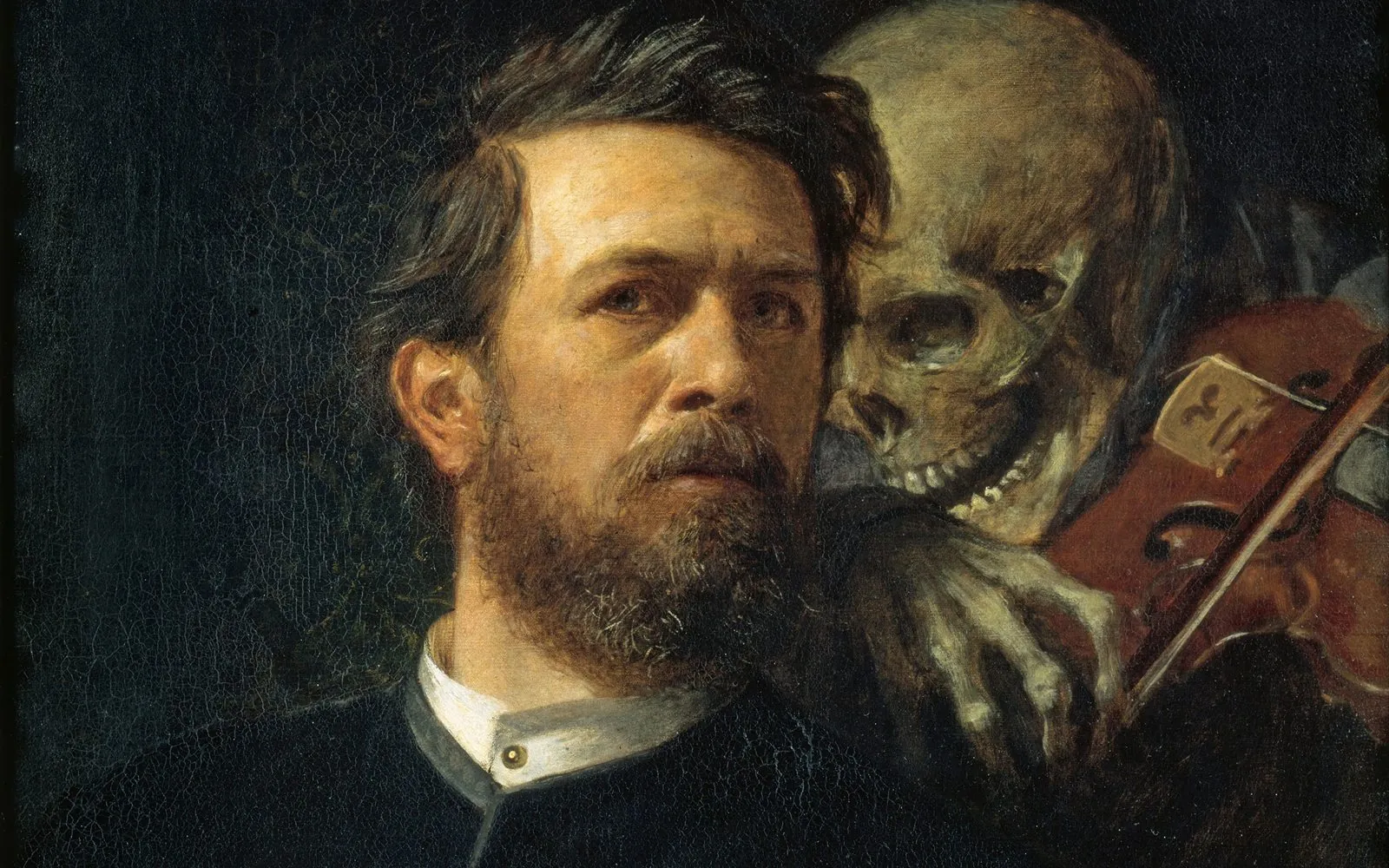
There are forms of content we almost want to move away from and, at the same time, cannot quite stop looking at. We open the news story we would rather not read, continue the episode that unsettles us, let the documentary run even as part of us wants to turn away.
The fascination with real crimes did not begin with podcasts, documentary series or the algorithms of streaming platforms. Long before we called it true crime, stories of murder, trial, confession and execution were already passing from hand to hand, sung in the streets, printed on loose sheets, discussed in public and taken up by newspapers.[1][2] The form has changed; the question seems to have remained. Why do certain dark stories hold our attention so strongly?
The first explanation is often morally simple: perhaps there is some taste for other people’s suffering. Psychology points to an answer that is less comfortable and more interesting.
Interest in the macabre does not have to be sadism, coldness or a sign of pathology. It often comes closer to what research calls morbid curiosity: the motivation to seek information about dangerous, threatening, aversive or taboo phenomena.[3][4] Here, the word morbid describes the kind of content being sought — death, harm, violence, threat — and does not mean that the curiosity itself is “sick”.
Perhaps the more precise question is not “why do we enjoy this?”, but “why do we want to know?”. The difference matters. We may open a news story, listen to an episode or keep watching a documentary without exactly liking what we are seeing. Sometimes what holds our attention is not pleasure. It is uncertainty.
A neuroimaging study suggests that choosing to view morbid information may involve brain circuits associated with reward and ordinary curiosity: discovery itself can be motivating, even when what we discover is unpleasant.[5]
Threat also carries information
The macabre becomes especially powerful when there is threat, uncertainty, human context and some distance of safety. There is danger, but we are not physically exposed to it. There is a story, but the explanation is incomplete.
Added to this tension are the people involved, the decisions made, chance, error and vulnerability. And there is an unsettling possibility: perhaps we can learn something without having to live through the consequence.
We can see this, on an everyday scale, in road rubbernecking: the driver who slows down to look at an accident, sometimes even to photograph it, although there is nothing useful they can do there.[6] It is not the same experience, but the same tension is there in miniature: danger is close, distance seems sufficient, and curiosity looks for an image, an explanation, a fragment of control.
One hypothesis for this attraction is that threatening content may offer information about risk. It is a plausible interpretation, but the idea that morbid curiosity is a specific adaptation remains unproven.[4][7]
We want to understand how a situation became dangerous, which signs were missed, what intentions were involved, how someone apparently ordinary could commit an extreme act, or how a person became vulnerable in a specific circumstance.
The difference from fictional horror helps explain this force. In a horror film we know, at some level, that the danger does not exist outside the story. We can be frightened and still relax: none of it actually happened.
In true crime that exit is not available. There is always the awareness that this really happened to someone. That proximity to reality makes the experience more uncomfortable, but also more absorbing.
Research does not indicate that consuming true crime makes anyone objectively safer. But it helps explain why certain narratives can seem to offer a form of psychological control: they turn a vague threat into a story with sequence, motives, signs and consequences.
Not just violence: mind, context and mystery
One of the most interesting points is that curiosity about true crime does not seem to be explained mainly by the search for graphic images.[8] Studies on morbid curiosity suggest that people tend to be more interested in negative scenes with social context than in decontextualised bodily harm.[3] In other words, it is not just blood that captures attention. It is the question of what happened.
In true crime consumption, curiosity about the minds of dangerous people appears to be especially relevant, more than curiosity about violence itself.[8] Many listeners and viewers want to understand patterns, intentions, manipulation, lying, coldness, impulsivity or planning. The perpetrator attracts attention not only because they are shocking, but because they seem to open a window onto a human possibility we would rather keep at a distance.
The boundary is delicate: understanding is not excusing; interest is not admiration. But narratives can easily slide from an attempt to understand into a kind of mythology of the criminal. When the story gives more depth, name, image and mystery to the perpetrator than to the victim, our attention is trained to gravitate toward the wrong place.
Does liking true crime say something about who we are?
It is tempting to imagine a “psychological profile” of someone interested in true crime: colder, darker, perhaps more disturbed than average. The data do not support that reading. In studies that developed and validated scales of morbid curiosity, classic personality traits explained little of this motivation.[4] The associations found are generally modest and do not describe a pathology.
Recent research has found some links between morbid curiosity, impulsivity, self-reported aggression or lower agreeableness.[8][9] But these are correlations, obtained in specific samples. They do not allow us to conclude that listening to homicide podcasts makes someone more aggressive or less empathic, nor that those people already were so before they started listening. Liking true crime is not, in itself, a warning sign about the person who consumes it.
True crime, fear and emotional regulation
Another common explanation is emotional regulation. As with horror, frightening content can function as a controlled exposure to fear: the threat is present on the screen or in the headphones, but the person can pause, stop, speed up, skip episodes or choose when to enter and leave the experience.[8]
Some people describe this consumption as a way of preparing themselves, others as company, others as an attempt to organise difficult personal experiences. In interviews with survivors of domestic violence, for example, some participants reported finding recognition, language, information about abuse and a sense of community in true crime.[10]
That idea calls for care. Saying that some people use true crime to regulate emotion is not the same as saying that true crime is therapeutic.
A study published in 2026, which followed almost 200 people over 14 days through a mobile diary, found no evidence that consuming true crime on one day increased anxiety or anger on the next. There were small signs that it might help people manage their emotions, but these were too slight to be meaningful in practice.[11]
Why do so many women consume true crime?
Research has found, with some consistency, higher true crime consumption among women.[8] One possible interpretation is defensive vigilance: looking for information about threats, danger signs, survival strategies or situations to avoid. Earlier studies have connected this interest to fear of sexual assault and to the search for information that might be useful for self-protection.[12]
This explanation makes sense, but it should not be turned into a simple conclusion. Differences in real risk, gender socialisation, culturally transmitted fear, previous experiences, identification with victims and media habits may all intersect. Science can identify patterns; it should not reduce millions of experiences to a single motivation.
Here too, an important distinction matters: feeling that one learns from a story does not prove that this learning increases safety. It may increase a sense of preparedness, help recognise signs or provide language for fear. That is psychologically relevant. But it is not the same as demonstrating objective protection.
The role of platforms
Digital culture did not invent morbid curiosity. Above all, it changed the ecology of attention.
Today, a crime story can appear through automatic recommendation, continue across episodes, generate discussion forums, become short clips, return with new theories and circulate among communities of people who comment, investigate, accuse or defend.
Availability is permanent. Moving from one case to another requires little effort. And what holds attention for longer becomes valuable to platforms, advertisers and creators.
This does not mean that “the algorithm” explains everything. Independent studies are still lacking on precisely how each platform amplifies this kind of content and with what psychological effects. But it is reasonable to say that digital infrastructure has made curiosity easier to satisfy, easier to repeat and easier to monetise.
The ethical question: when curiosity meets real people
Psychology can explain why we want to know. It cannot, on its own, answer whether we should turn everything we want to know into entertainment.
In true crime, the victims existed. Their families continue to exist. There are people who see their pain turned into an episode, a debate, a theory, a meme, recommended content or an object of speculation.
Recent studies with relatives and people close to cases portrayed in true crime point to recurring problems: inaccuracies, sensationalism, loss of privacy, unwanted contact from audiences and a feeling of having little control over how the story was used.[13]
There are also inequalities of attention. Research on the so-called Missing White Woman Syndrome shows that some victims receive much more coverage, empathy and public narrative than others.[14] The move into podcasts and digital platforms has not automatically removed those biases. It may reproduce them with a different aesthetic.[15]
Consuming true crime ethically may involve simple questions: does the story centre the victim, or turn the perpetrator into a fascinating figure? Does it distinguish facts from speculation? Does it avoid graphic details without informational value? Does it respect families? Does it acknowledge uncertainty? Does it discourage harassment, public accusations and amateur “investigations” directed at real people?
So why can’t we look away?
Because threat activates both avoidance and approach. One part of us wants to move away from what frightens, repulses or disturbs us.
Another part wants to understand, reduce uncertainty, anticipate danger, recognise intentions and complete the story. Morbid curiosity is born in that tension.
True crime is so effective because it offers danger without physical exposure, mystery with the promise of resolution, and narrative access to extreme zones of human behaviour. But science recommends restraint: we know quite a lot about why we approach this kind of content; we know much less about what that approach turns us into over time.
Perhaps the most honest answer is this: looking at the macabre does not make us inhuman, but it also does not free us from responsibility. Curiosity is human. The way we feed it, what it erases and who pays the price of our attention remain open questions.
References
- MacMillan, K. (2016). True crime reporting in early modern England. Oxford Research Encyclopedia of Criminology and Criminal Justice.
- Cambridge University Library. (n.d.). Staging crime. Read all about it!
- Oosterwijk, S. (2017). Choosing the negative: A behavioral demonstration of morbid curiosity. PLOS ONE, 12(7), e0178399.
- Scrivner, C. (2021). The psychology of morbid curiosity: Development and initial validation of the Morbid Curiosity Scale. Personality and Individual Differences, 183, 111139.
- Oosterwijk, S., Snoek, L., Tekoppele, J., Engelbert, L. H., & Scholte, H. S. (2020). Choosing to view morbid information involves reward circuitry. Scientific Reports, 10, 15291.
- Jornal de Notícias. (n.d.). Voyeurismo mórbido na Segunda Circular: a velocidade, as fotos e o crime.
- March, D. S. (2026). Morbid curiosity as an adapted motivation to explore ambiguous but survival-relevant stimuli. Psychological Review.
- Perchtold-Stefan, C., Rominger, C., Ceh, S., Sattler, K., Veit, S.-V., & Fink, A. (2026). Out of the dark: Psychological perspectives on people's fascination with true crime. British Journal of Psychology, 117(3), 880–909.
- da Silva, P. D. G., de Queiroz Gomes, A. I., Gouveia, V. V., & Coutinho, T. V. (2026). Morbid curiosity and its personality correlates: A psycholexical perspective. Personality and Individual Differences, 257, 113784.
- Boling, K. S. (2023). “It’s that ‘there but for the grace of God go I’ piece of it”: Domestic violence survivors in true crime podcast audiences. Mass Communication and Society, 26(6), 991–1013.
- Perchtold-Stefan, C. M., Rominger, C., & Fink, A. (2026). Does true crime increase negative affect, or negative affect lead to true crime? A cross-lagged analysis on the dynamics of consuming frightening media. BMC Psychology, 14, 1247.
- McDonald, M. M., James, R. M., & Roberto, D. P. (2021). True crime consumption as defensive vigilance: Psychological mechanisms of a rape avoidance system. Archives of Sexual Behavior, 50(5), 2085–2108.
- Boling, K. S., & Slakoff, D. C. (2025). “What an invasion, an immense invasion”: Examining the adverse effects of true crime media on co-victims. Crime, Media, Culture.
- Sommers, Z. (2016). Missing White Woman Syndrome: An empirical analysis of race and gender disparities in online news coverage of missing persons. Journal of Criminal Law and Criminology, 106(2).
- Slakoff, D. C., & Duran, D. (2025). A new media frontier, or more of the same? A descriptive analysis of the “Missing White Woman Syndrome” in top true crime podcasts. Race and Justice, 15(4).
Revised 27 September 2026.