Hanging up your boots: who are we when we stop doing what defined us?
· 8 min read
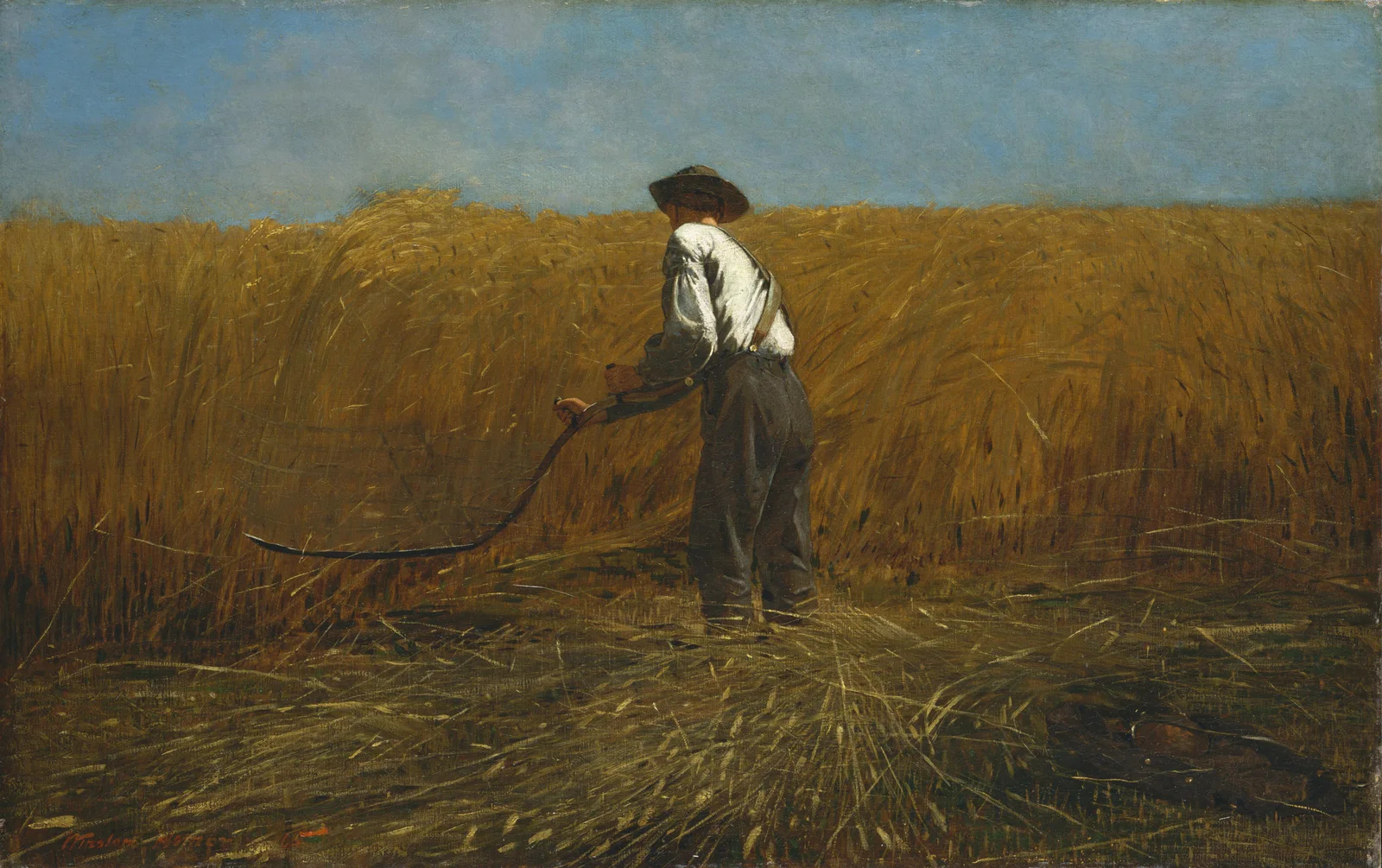
Winslow Homer, The Veteran in a New Field (1865). The Metropolitan Museum of Art, New York / Wikimedia Commons, public domain.
O desporto torna particularmente visível uma pergunta que não pertence apenas aos atletas: como aceitar que já não conseguimos, ou já não queremos, continuar como antes? E, sobretudo, quem somos quando deixamos de ocupar o lugar que durante tanto tempo nos definiu?
Podemos encontrar esta pergunta nas discussões sobre o fim da carreira de um futebolista, mas também na aproximação da reforma, numa mudança de profissão ou quando a saúde obriga a reduzir uma atividade. São situações diferentes: um atleta pode terminar a carreira muito antes da velhice, e reformar-se não significa ter perdido capacidades. Ainda assim, estas mudanças podem mexer com algo que vai além da rotina: a maneira como nos reconhecemos.
«Pendurar as chuteiras» parece uma decisão simples vista de fora. Por dentro, pode significar despedirmo-nos de uma rotina, deixar de fazer o que sabíamos fazer melhor ou aprender a viver sem a função pela qual os outros nos conheciam.
Quando uma função se torna parte de nós
Uma profissão pode ocupar muito mais do que as horas de trabalho. Organiza os dias, aproxima-nos de outras pessoas, dá objetivos e permite sentir que fazemos falta. Quando dizemos «sou professor», «sou médico» ou «sou atleta», estamos frequentemente a dizer algo sobre a nossa história, e não apenas sobre a atividade pela qual recebemos um salário.
A investigação sobre o sentido de vida na reforma ajuda a compreender esta ligação. A forma como vivemos a mudança depende também do que o trabalho significava para nós e do que continua a dar sentido aos nossos dias. Não existe uma única experiência psicológica de reforma. [1]
Ter uma ligação forte ao que fazemos não é um defeito. A mudança pode tornar-se mais difícil quando essa função é quase a única resposta à pergunta «quem sou eu?». Num estudo com antigos atletas de alta competição, as dificuldades de identidade estavam associadas a experiências mais negativas da transição. O problema não é a dedicação em si, mas a dificuldade de reconhecer outras partes da vida quando esse papel termina. [2]
Podemos falar de luto?
Num sentido amplo, podemos falar de luto quando precisamos de reorganizar a vida perante a perda de algo importante. Não apenas de uma pessoa, mas também de uma possibilidade, de um lugar que ocupávamos ou de uma versão de nós próprios.
Esta é uma maneira de compreender a experiência, não um diagnóstico nem uma etapa obrigatória da reforma. Algumas pessoas vivem uma perda marcada; outras sentem sobretudo alívio. As duas experiências também podem coexistir: estar satisfeito por deixar de trabalhar não impede ter saudades de certas pessoas ou da sensação de ser necessário. Nas entrevistas com antigos atletas, os relatos de perda coexistiam com uma avaliação positiva da vida depois da carreira. [2]
Também não devemos confundir tristeza perante uma mudança com depressão. Uma revisão de estudos longitudinais encontrou uma associação mais forte entre sintomas depressivos e reforma involuntária do que com reforma voluntária ou determinada pelas regras de idade. As diferenças lembram-nos que sair por escolha e sair por imposição não são a mesma experiência. [3]
Reconhecer uma perda não transforma a mudança numa tragédia. Permite dar tempo a quem ainda está a despedir-se de uma parte importante da sua vida, sem lhe exigir entusiasmo imediato.
O confronto com quem já fomos
Às vezes, não nos comparamos apenas com os outros. Comparamo-nos com a pessoa que éramos: a que corria mais depressa, resolvia tudo sem se cansar ou era chamada sempre que havia um problema difícil.
Num estudo com adultos entre os 50 e os 90 anos, comparar-se desfavoravelmente com o próprio passado estava associado a menor autoestima. Mas os participantes não percebiam perdas em tudo: sentir menor capacidade física era mais frequente do que sentir menor capacidade mental ou de lidar com dificuldades. O estudo não esclarece o que influencia o quê, mas ajuda a distinguir uma dificuldade específica de uma avaliação da pessoa inteira. [4]
«Já não consigo fazer isto como antes» é uma observação. «Já não sirvo para nada» é uma conclusão muito mais ampla, que essa observação não demonstra.
Nem toda a dificuldade é definitiva, nem toda a diminuição de desempenho significa que chegou o momento de parar. O envelhecimento também não segue um calendário uniforme de incapacidade: pessoas da mesma idade podem ter condições e possibilidades muito diferentes. [5]
Talvez a pergunta mais útil não seja «ainda sou tão bom como fui?», mas «o que consigo fazer agora, em que condições e com que custo?». Aceitar uma mudança pode começar por olhar para ela com clareza, sem a negar nem a transformar numa sentença sobre o nosso valor.
Persistir ou mudar de direção?
Aprendemos a valorizar a persistência. E com razão: muitas coisas importantes exigem continuar apesar das dificuldades. Mas persistir não é sempre a resposta certa, tal como desistir não é sempre um sinal de maturidade.
Uma meta-análise sobre ajustamento de objetivos distingue dois movimentos: deixar de investir numa meta e encontrar outras em que investir. A capacidade de se afastar de objetivos inviáveis estava associada a menor mal-estar; envolver-se em novos objetivos também se relacionava com maior bem-estar. A evidência, de qualidade baixa a moderada, não permite prometer que mudar de objetivo nos fará sentir melhor. Mostra, porém, que a persistência não é a única capacidade que importa. [6]
Mudar de direção nem sempre exige abandonar uma atividade. Pode significar reduzir o ritmo, alterar responsabilidades ou preservar o que nos importa através de outra forma de participação. Não temos de escolher apenas entre continuar exatamente como antes e abandonar tudo.
Também importa perceber o que nos faz insistir. Num estudo com atletas, procurar atingir padrões elevados estava associado a indicadores de saúde mental mais favoráveis, enquanto a preocupação com erros e avaliações negativas se relacionava com maior sofrimento. Embora não investigue a reforma, o estudo ajuda a distinguir a ambição da dureza com que nos julgamos. [7]
Podemos querer continuar porque gostamos profundamente do que fazemos. E podemos continuar porque parar nos parece uma prova de fracasso. Vale a pena perceber a diferença, mesmo quando as duas razões convivem.
A forma como nos deixam sair
Deixar uma função não é apenas uma mudança individual. É também uma mudança nas relações com quem estava à nossa volta.
No estudo australiano já referido, vários antigos atletas descreveram sentir-se dispensáveis depois do fim da carreira, com pouco contacto ou acompanhamento das organizações. O apoio das equipas estava associado a menos dificuldades de identidade. O apoio das equipas, dos amigos e da família relacionava-se também com menos dificuldades em lidar com outras exigências da vida após a carreira. [2]
Esta dimensão impede-nos de reduzir tudo a «não saber aceitar». Deixar uma função e sentir que deixámos de contar são coisas diferentes. Podemos aceitar que outra pessoa ocupe o nosso lugar e sofrer com a sensação de que tudo o que fizemos foi esquecido.
Reconhecer um percurso, conversar sobre a passagem de responsabilidades e manter relações para além da utilidade imediata são formas de tratar a pessoa como alguém que não se esgota na função. Não exigem prolongar indefinidamente o mesmo papel; permitem que ele termine sem que termine também a consideração pela pessoa.
Uma vida que não precisa de começar do zero
Fala-se frequentemente da reforma como uma oportunidade de «reinvenção». Para algumas pessoas, essa palavra faz sentido. Para outras, acrescenta pressão: depois de uma vida de trabalho, parece ser preciso apresentar uma nova versão extraordinária de si próprias.
Não é necessário apagar o passado para viver de outra maneira. Podemos levar connosco interesses, relações e conhecimentos, sem ter de continuar a fazer tudo como antes. Num estudo que acompanhou pessoas ao longo da reforma, manter a pertença a grupos sociais estava associado a melhor qualidade de vida. A associação não prova causalidade, mas ajuda a perceber a importância das relações, para além de ter a agenda preenchida. [8]
Também seria injusto apresentar a adaptação como uma questão de atitude. Uma meta-análise sobre ajustamento à reforma identifica a relevância da saúde, das condições financeiras e das circunstâncias da saída, entre outros fatores. As possibilidades de escolha não são iguais para todos. [9]
Ter uma atividade nova, ensinar o que sabemos ou participar numa associação pode ser significativo. Mas descansar, cultivar amizades ou recuperar tempo para interesses antigos também pode sê-lo. O valor de uma pessoa não precisa de ser novamente demonstrado através da produtividade.
Encontrar lugar para o que vem a seguir
Preparar esta mudança não significa ter o futuro completamente resolvido. Pode começar por perceber o que a atividade nos dá: rendimento, estrutura, contacto, reconhecimento, prazer ou um motivo para sair de casa. Distinguir essas necessidades permite procurar diferentes formas de lhes responder, em vez de exigir que uma única atividade substitua tudo.
Por exemplo, um professor pode sentir falta de ensinar, das conversas com os colegas ou do ritmo que a escola dava à semana. São faltas diferentes. Partilhar conhecimentos pode responder à primeira; manter encontros regulares, à segunda; criar uma rotina, à terceira. Nenhuma destas possibilidades exige reconstruir a vida profissional por inteiro.
Também pode ajudar conversar sobre o que vai mudar, preservar relações que fazem sentido e experimentar outros interesses antes de a função terminar. Estas possibilidades devem ser ajustadas às condições e desejos de cada pessoa, não transformadas numa lista de obrigações para uma «boa reforma».
Quando o sofrimento se prolonga, limita a vida quotidiana ou se acompanha de isolamento crescente, pode fazer sentido procurar apoio psicológico. Não para aprender a desistir, mas para compreender o que se perdeu, o que permanece e que possibilidades ainda existem.
Pendurar as chuteiras pode custar, sobretudo quando as calçámos durante grande parte da vida. Mas deixar de fazer aquilo que nos definiu não apaga a história nem nos reduz ao que já não conseguimos fazer.
Talvez aceitar a mudança seja isto: reconhecer que uma parte da vida terminou, sem concluir que terminámos com ela.
Referências
Wood, R. E., e Pachana, N. A. (2025). The role of meaning in the retirement transition: scoping review. The Gerontologist, 65(6), gnaf076. Artigo.
Brockett, C. L., Stansen, C., Bourke, M., Pascoe, M., Clements, M., e Parker, A. G. (2024). Factors that influence mental health and well-being of high-performance athletes from Olympic or Paralympic sport who have transitioned out of national-level or international-level sport: a mixed methods approach. BMJ Open Sport & Exercise Medicine, 10(2), e001991. Texto integral.
Li, W., Ye, X., Zhu, D., e He, P. (2021). The longitudinal association between retirement and depression: a systematic review and meta-analysis. American Journal of Epidemiology, 190(10), 2220–2230. Registo bibliográfico.
Ferring, D., e Hoffmann, M. (2007). “Still the same and better off than others?”: social and temporal comparisons in old age. European Journal of Ageing, 4, 23–34. Texto integral.
Riddell, H., e colaboradores. (2026; publicação online em 2025). A meta-analytic review and conceptual model of the antecedents and outcomes of goal adjustment in response to striving difficulties. Nature Human Behaviour, 10, 317–332. Artigo.
Turakka, S., White, R. G., Robazza, C., Keinonen, K., e Ruiz, M. C. (2026). Perfectionism and athletes’ mental health: the mediating role of self-compassion. Performance Enhancement & Health, 14(3), 100431. Artigo.
Steffens, N. K., e colaboradores. (2016). Social group memberships in retirement are associated with reduced risk of premature death: evidence from a longitudinal cohort study. BMJ Open, 6, e010164. Artigo.
La Rue, C. J., Haslam, C., e Steffens, N. K. (2022). A meta-analysis of retirement adjustment predictors. Journal of Vocational Behavior, 136, 103723. Artigo.
Sport brings into focus a question that concerns more than athletes: how do we accept that we can no longer, or no longer want to, carry on as before? And, above all, who are we when we no longer occupy the place that defined us for so long?
This question comes up in discussions about the end of a footballer's career, but also as retirement approaches, when we change professions or when our health forces us to cut back on an activity. These are different situations: an athlete may end their career long before old age, and retiring does not mean losing our abilities. Even so, these changes can affect something beyond our routine: our sense of who we are.
From the outside, hanging up your boots can look like a straightforward decision. From within, it may mean saying goodbye to a routine, stepping away from what we did best or learning to live without the role through which others knew us.
When a role becomes part of us
A profession can take up much more than our working hours. It structures our days, brings us closer to other people, gives us goals and helps us feel needed. When we say "I am a teacher", "I am a doctor" or "I am an athlete", we are often saying something about our life story, not simply describing what we are paid to do.
Research on meaning in retirement helps us understand this connection. How we experience the change also depends on what work meant to us and what continues to give meaning to our days. There is no single psychological experience of retirement. [1]
Being deeply attached to what we do is not a flaw. Change can become harder when that role is almost our only answer to the question "who am I?" In a study of former elite athletes, difficulties with identity were associated with more negative experiences of the transition. The problem is not dedication itself, but the difficulty of recognising other parts of life when that role ends. [2]
Can we speak of grief?
In a broad sense, we can speak of grief when we need to reorganise our lives after losing something important. Not only a person, but also a possibility, a place we occupied or a version of ourselves.
This is one way of understanding the experience, not a diagnosis or a compulsory stage of retirement. Some people feel a profound loss; others mainly feel relief. The two can also coexist: being glad to stop working does not prevent us from missing certain people or the feeling of being needed. In interviews with former athletes, accounts of loss coexisted with a positive view of life after their careers. [2]
Nor should we confuse sadness in response to change with depression. A review of longitudinal studies found a stronger association between depressive symptoms and involuntary retirement than with voluntary retirement or retirement under age-based rules. These differences remind us that leaving by choice and being required to leave are not the same experience. [3]
Acknowledging a loss does not turn change into a tragedy. It allows time for someone who is still saying goodbye to an important part of their life, without expecting immediate enthusiasm.
Facing who we used to be
Sometimes we compare ourselves not only with others, but with the person we once were: the one who ran faster, handled everything without getting tired or was called upon whenever there was a difficult problem.
In a study of adults aged 50 to 90, comparing oneself unfavourably with one's past self was associated with lower self-esteem. But participants did not perceive losses in everything: feeling less physically capable was more common than feeling less mentally capable or less able to cope with difficulties. The study does not establish which influences which, but it helps distinguish a specific difficulty from an assessment of the whole person. [4]
"I can no longer do this as I used to" is an observation. "I am no use to anyone anymore" is a much broader conclusion, which that observation does not establish.
Not every difficulty is permanent, and not every decline in performance means it is time to stop. Ageing does not follow a uniform timetable of incapacity either: people of the same age can have very different circumstances and abilities. [5]
Perhaps the more useful question is not "am I still as good as I once was?", but "what can I do now, under what conditions and at what cost?" Accepting change can begin with seeing it clearly, neither denying it nor turning it into a verdict on our worth.
Persist or change direction?
We learn to value persistence. And rightly so: many important things require us to keep going despite difficulties. But persistence is not always the right answer, just as giving up is not always a sign of maturity.
A meta-analysis of goal adjustment distinguishes two processes: withdrawing effort from a goal and finding other goals to pursue. The ability to step away from unattainable goals was associated with less distress; engaging with new goals was also related to greater well-being. The evidence, rated as low to moderate in quality, does not allow us to promise that changing goals will make us feel better. It does show, however, that persistence is not the only capacity that matters. [6]
Changing direction does not always mean abandoning an activity. It may mean slowing down, changing responsibilities or preserving what matters to us through a different way of taking part. We do not have to choose only between carrying on exactly as before and giving everything up.
It also matters to understand what keeps us going. In a study of athletes, striving to meet high standards was associated with more favourable mental health indicators, whereas concern about mistakes and negative evaluations was related to greater distress. Although it did not investigate retirement, the study helps distinguish ambition from the harshness with which we judge ourselves. [7]
We may want to continue because we deeply enjoy what we do. We may also continue because stopping feels like proof of failure. It is worth understanding the difference, even when both reasons coexist.
How others respond when we leave
Leaving a role is not only a personal change. It also changes our relationships with the people around us.
In the Australian study mentioned earlier, several former athletes described feeling expendable after their careers ended, with little contact or follow-up from their organisations. Support from teams was associated with fewer identity difficulties. Support from teams, friends and family was also related to fewer difficulties coping with other demands of life after sport. [2]
This dimension prevents us from reducing everything to "not knowing how to accept it". Leaving a role and feeling that we no longer matter are different things. We can accept someone else taking our place and still be hurt by the feeling that everything we did has been forgotten.
Acknowledging someone's contribution, discussing the handover of responsibilities and maintaining relationships beyond their immediate usefulness are ways of recognising that a person is more than their role. They do not require that role to continue indefinitely. The role can end without the person losing the respect and consideration they deserve.
A life that does not have to start from scratch
Retirement is often described as an opportunity for "reinvention". For some people, that word makes sense. For others, it adds pressure: after a lifetime of work, it seems they must now present an extraordinary new version of themselves.
We do not need to erase the past to live differently. We can carry our interests, relationships and knowledge with us without having to keep doing everything as before. In a study that followed people through retirement, maintaining social group memberships was associated with better quality of life. The association does not establish causation, but it helps us understand the importance of relationships, beyond having a full diary. [8]
It would also be unfair to present adjustment as a matter of attitude. A meta-analysis of retirement adjustment identifies the relevance of health, financial circumstances and the conditions under which people leave work, among other factors. Not everyone has the same choices available to them. [9]
Taking up a new activity, sharing what we know or joining a community organisation can be meaningful. So can resting, nurturing friendships or making time again for old interests. A person's worth does not need to be proved all over again through productivity.
Making room for what comes next
Preparing for this change does not mean having the future completely worked out. It can begin with understanding what the activity gives us: income, structure, contact, recognition, pleasure or a reason to leave the house. Distinguishing these needs allows us to look for different ways of meeting them, rather than expecting one activity to replace everything.
For example, a teacher may miss teaching, conversations with colleagues or the rhythm that school gave to the week. These are different things to miss. Sharing knowledge may address the first; meeting people regularly, the second; establishing a routine, the third. None of these possibilities requires recreating an entire working life.
It may also help to talk about what will change, preserve relationships that matter and try other interests before the role ends. These possibilities should fit each person's circumstances and wishes, rather than become a list of obligations for a "good retirement".
When distress persists, limits everyday life or is accompanied by increasing isolation, seeking psychological support may be helpful. Not to learn how to give up, but to understand what has been lost, what remains and what possibilities still exist.
Hanging up your boots can be painful, especially when you have worn them for much of your life. But stopping what defined us does not erase our history or reduce us to what we can no longer do.
Perhaps accepting change means this: recognising that a part of our life has ended, without believing that our own story is over.
References
Wood, R. E., and Pachana, N. A. (2025). The role of meaning in the retirement transition: scoping review. The Gerontologist, 65(6), gnaf076. Article.
Brockett, C. L., Stansen, C., Bourke, M., Pascoe, M., Clements, M., and Parker, A. G. (2024). Factors that influence mental health and well-being of high-performance athletes from Olympic or Paralympic sport who have transitioned out of national-level or international-level sport: a mixed methods approach. BMJ Open Sport & Exercise Medicine, 10(2), e001991. Full text.
Li, W., Ye, X., Zhu, D., and He, P. (2021). The longitudinal association between retirement and depression: a systematic review and meta-analysis. American Journal of Epidemiology, 190(10), 2220–2230. Bibliographic record.
Ferring, D., and Hoffmann, M. (2007). “Still the same and better off than others?”: social and temporal comparisons in old age. European Journal of Ageing, 4, 23–34. Full text.
World Health Organization. Ageing and health. Fact sheet.
Riddell, H., and colleagues. (2026; first published online in 2025). A meta-analytic review and conceptual model of the antecedents and outcomes of goal adjustment in response to striving difficulties. Nature Human Behaviour, 10, 317–332. Article.
Turakka, S., White, R. G., Robazza, C., Keinonen, K., and Ruiz, M. C. (2026). Perfectionism and athletes’ mental health: the mediating role of self-compassion. Performance Enhancement & Health, 14(3), 100431. Article.
Steffens, N. K., and colleagues. (2016). Social group memberships in retirement are associated with reduced risk of premature death: evidence from a longitudinal cohort study. BMJ Open, 6, e010164. Article.
La Rue, C. J., Haslam, C., and Steffens, N. K. (2022). A meta-analysis of retirement adjustment predictors. Journal of Vocational Behavior, 136, 103723. Article.
Le sport rend particulièrement visible une question qui ne concerne pas seulement les athlètes : comment accepter de ne plus pouvoir, ou de ne plus vouloir, continuer comme avant ? Et surtout, qui sommes-nous lorsque nous n’occupons plus la place qui nous a définis pendant si longtemps ?
Cette question se retrouve dans les discussions sur la fin de carrière d’un footballeur, mais aussi à l’approche de la retraite, lors d’un changement de métier ou lorsque la santé oblige à réduire une activité. Ces situations sont différentes : un athlète peut terminer sa carrière bien avant la vieillesse, et partir à la retraite ne signifie pas avoir perdu ses capacités. Pourtant, ces changements peuvent toucher quelque chose qui dépasse la routine : la façon dont nous nous percevons.
« Raccrocher les crampons » peut sembler une décision simple, vue de l’extérieur. De l’intérieur, cela peut signifier faire ses adieux à une routine, cesser de faire ce que nous savions faire le mieux ou apprendre à vivre sans le rôle par lequel les autres nous connaissaient.
Quand un rôle devient une part de nous-mêmes
Un métier peut occuper bien plus que nos heures de travail. Il structure les journées, nous rapproche d’autres personnes, nous donne des objectifs et nous permet de sentir que l’on a besoin de nous. Lorsque nous disons « je suis enseignant », « je suis médecin » ou « je suis athlète », nous parlons souvent de notre histoire, et pas seulement de l’activité pour laquelle nous percevons un salaire.
Les recherches sur le sens de la vie à la retraite aident à comprendre ce lien. La façon dont nous vivons le changement dépend aussi de ce que le travail représentait pour nous et de ce qui continue à donner du sens à nos journées. Il n’existe pas une seule manière de vivre psychologiquement la retraite. [1]
Être fortement attaché à ce que nous faisons n’est pas un défaut. Le changement peut devenir plus difficile lorsque ce rôle est presque notre seule réponse à la question « qui suis-je ? ». Dans une étude menée auprès d’anciens athlètes de haut niveau, les difficultés liées à l’identité étaient associées à un vécu plus négatif de la transition. Le problème n’est pas l’investissement en lui-même, mais la difficulté à reconnaître les autres dimensions de sa vie lorsque ce rôle prend fin. [2]
Peut-on parler de deuil ?
Au sens large, nous pouvons parler de deuil lorsque nous devons réorganiser notre vie après la perte de quelque chose d’important. Pas seulement d’une personne, mais aussi d’une possibilité, d’une place que nous occupions ou d’une version de nous-mêmes.
Il s’agit d’une façon de comprendre l’expérience, pas d’un diagnostic ni d’une étape obligatoire de la retraite. Certaines personnes ressentent une perte profonde ; d’autres éprouvent surtout du soulagement. Les deux peuvent aussi coexister : être heureux de ne plus travailler n’empêche pas de regretter certaines personnes ou le sentiment d’être nécessaire. Dans les entretiens avec d’anciens athlètes, les récits de perte coexistaient avec une appréciation positive de la vie après leur carrière. [2]
Il ne faut pas non plus confondre la tristesse face à un changement avec la dépression. Une revue d’études longitudinales a trouvé une association plus forte entre les symptômes dépressifs et la retraite involontaire qu’avec la retraite volontaire ou liée aux règles d’âge. Ces différences nous rappellent que partir par choix et devoir partir ne sont pas la même expérience. [3]
Reconnaître une perte ne transforme pas le changement en tragédie. Cela permet de laisser du temps à une personne qui fait encore ses adieux à une part importante de sa vie, sans exiger d’elle un enthousiasme immédiat.
Face à la personne que nous étions
Parfois, nous ne nous comparons pas seulement aux autres. Nous nous comparons à la personne que nous étions : celle qui courait plus vite, réglait tout sans se fatiguer ou que l’on sollicitait dès qu’un problème difficile se présentait.
Dans une étude menée auprès d’adultes de 50 à 90 ans, se comparer défavorablement à soi-même dans le passé était associé à une moindre estime de soi. Mais les participants ne percevaient pas des pertes dans tous les domaines : le sentiment d’une diminution des capacités physiques était plus fréquent que celui d’une diminution des capacités mentales ou de la capacité à faire face aux difficultés. L’étude ne permet pas de déterminer ce qui influence quoi, mais elle aide à distinguer une difficulté précise d’un jugement sur la personne tout entière. [4]
« Je n’arrive plus à faire cela comme avant » est un constat. « Je ne sers plus à rien » est une conclusion beaucoup plus large, que ce constat ne suffit pas à justifier.
Toute difficulté n’est pas définitive, et toute baisse de performance ne signifie pas qu’il est temps de s’arrêter. Le vieillissement ne suit pas non plus un calendrier uniforme de perte des capacités : des personnes du même âge peuvent avoir des conditions de vie et des possibilités très différentes. [5]
La question la plus utile n’est peut-être pas « suis-je encore aussi bon qu’avant ? », mais « que puis-je faire aujourd’hui, dans quelles conditions et à quel prix ? ». Accepter un changement peut commencer par le regarder clairement, sans le nier ni en faire un verdict sur notre valeur.
Persévérer ou changer de direction ?
Nous apprenons à valoriser la persévérance. À juste titre : beaucoup de choses importantes exigent de continuer malgré les difficultés. Mais persévérer n’est pas toujours la bonne réponse, tout comme renoncer n’est pas toujours un signe de maturité.
Une méta-analyse sur l’ajustement des objectifs distingue deux mouvements : cesser de s’investir dans un objectif et en trouver d’autres dans lesquels s’engager. La capacité à se détacher d’objectifs devenus inatteignables était associée à moins de mal-être ; l’engagement dans de nouveaux objectifs était également lié à davantage de bien-être. Les données, de qualité faible à modérée, ne permettent pas de promettre que changer d’objectif nous fera nous sentir mieux. Elles montrent néanmoins que la persévérance n’est pas la seule capacité qui compte. [6]
Changer de direction n’exige pas toujours d’abandonner une activité. Cela peut signifier ralentir, modifier ses responsabilités ou préserver ce qui nous importe en participant autrement. Nous n’avons pas à choisir uniquement entre continuer exactement comme avant et tout abandonner.
Il importe aussi de comprendre ce qui nous pousse à continuer. Dans une étude menée auprès d’athlètes, chercher à atteindre des standards élevés était associé à des indicateurs de santé mentale plus favorables, tandis que la crainte des erreurs et des évaluations négatives était liée à davantage de souffrance. Bien qu’elle ne porte pas sur la retraite, cette étude aide à distinguer l’ambition de la sévérité avec laquelle nous nous jugeons. [7]
Nous pouvons vouloir continuer parce que nous aimons profondément ce que nous faisons. Et nous pouvons continuer parce que nous arrêter nous semble être la preuve d’un échec. Il vaut la peine de comprendre la différence, même lorsque les deux raisons coexistent.
La manière dont les autres accueillent notre départ
Quitter un rôle n’est pas seulement un changement personnel. C’est aussi un changement dans les relations avec les personnes qui nous entouraient.
Dans l’étude australienne déjà citée, plusieurs anciens athlètes ont décrit le sentiment de ne plus compter après la fin de leur carrière, avec peu de contacts ou de suivi de la part des organisations. Le soutien des équipes était associé à moins de difficultés liées à l’identité. Le soutien des équipes, des amis et de la famille était également lié à moins de difficultés pour faire face aux autres exigences de la vie après la carrière sportive. [2]
Cette dimension nous empêche de tout réduire à une difficulté à « savoir accepter ». Quitter un rôle et avoir le sentiment de ne plus compter sont deux choses différentes. Nous pouvons accepter que quelqu’un d’autre prenne notre place et souffrir malgré tout de l’impression que tout ce que nous avons fait a été oublié.
Reconnaître un parcours, discuter de la transmission des responsabilités et maintenir les relations au-delà de leur utilité immédiate sont des façons de reconnaître qu’une personne ne se résume pas à son rôle. Elles n’exigent pas de prolonger indéfiniment ce rôle ; elles permettent qu’il prenne fin sans que la considération pour la personne disparaisse avec lui.
Une vie qui n’a pas à repartir de zéro
On présente souvent la retraite comme une occasion de « se réinventer ». Pour certaines personnes, cette expression a du sens. Pour d’autres, elle ajoute une pression : après toute une vie de travail, il semblerait nécessaire de proposer une nouvelle version extraordinaire de soi-même.
Il n’est pas nécessaire d’effacer le passé pour vivre autrement. Nous pouvons garder nos centres d’intérêt, nos relations et nos connaissances, sans devoir continuer à tout faire comme avant. Dans une étude qui a suivi des personnes au cours de leur passage à la retraite, le maintien de l’appartenance à des groupes sociaux était associé à une meilleure qualité de vie. Cette association ne démontre pas un lien de cause à effet, mais elle aide à comprendre l’importance des relations, au-delà d’un agenda rempli. [8]
Il serait également injuste de présenter l’adaptation comme une question d’attitude. Une méta-analyse sur l’adaptation à la retraite souligne l’importance de la santé, de la situation financière et des circonstances du départ, entre autres facteurs. Tout le monde ne dispose pas des mêmes possibilités de choix. [9]
Commencer une nouvelle activité, transmettre ce que nous savons ou participer à une association peut avoir du sens. Mais se reposer, cultiver des amitiés ou retrouver du temps pour d’anciens centres d’intérêt peut en avoir aussi. La valeur d’une personne n’a pas à être démontrée à nouveau par sa productivité.
Faire une place à la suite
Préparer ce changement ne signifie pas avoir entièrement réglé son avenir. Cela peut commencer par comprendre ce que l’activité nous apporte : un revenu, une structure, des contacts, de la reconnaissance, du plaisir ou une raison de sortir de chez soi. Distinguer ces besoins permet de chercher différentes façons d’y répondre, plutôt que d’exiger qu’une seule activité remplace tout.
Par exemple, un enseignant peut regretter l’enseignement, les conversations avec ses collègues ou le rythme que l’école donnait à sa semaine. Ce sont des manques différents. Transmettre ses connaissances peut répondre au premier ; prévoir des rencontres régulières, au deuxième ; établir une routine, au troisième. Aucune de ces possibilités n’exige de recréer toute sa vie professionnelle.
Il peut aussi être utile de parler de ce qui va changer, de préserver les relations qui comptent et d’explorer d’autres centres d’intérêt avant que le rôle ne prenne fin. Ces possibilités doivent être adaptées aux conditions de vie et aux souhaits de chacun, et non devenir une liste d’obligations pour une « bonne retraite ».
Lorsque la souffrance se prolonge, limite la vie quotidienne ou s’accompagne d’un isolement croissant, il peut être utile de chercher un soutien psychologique. Non pour apprendre à renoncer, mais pour comprendre ce qui a été perdu, ce qui demeure et quelles possibilités existent encore.
Raccrocher les crampons peut être douloureux, surtout lorsqu’on les a portés pendant une grande partie de sa vie. Mais cesser de faire ce qui nous définissait n’efface pas notre histoire et ne nous réduit pas à ce que nous ne pouvons plus faire.
Accepter le changement, c’est peut-être cela : reconnaître qu’une partie de notre vie s’est terminée, sans en conclure que notre propre histoire est finie.
Références
Wood, R. E., et Pachana, N. A. (2025). The role of meaning in the retirement transition: scoping review. The Gerontologist, 65(6), gnaf076. Article.
Brockett, C. L., Stansen, C., Bourke, M., Pascoe, M., Clements, M., et Parker, A. G. (2024). Factors that influence mental health and well-being of high-performance athletes from Olympic or Paralympic sport who have transitioned out of national-level or international-level sport: a mixed methods approach. BMJ Open Sport & Exercise Medicine, 10(2), e001991. Texte intégral.
Li, W., Ye, X., Zhu, D., et He, P. (2021). The longitudinal association between retirement and depression: a systematic review and meta-analysis. American Journal of Epidemiology, 190(10), 2220–2230. Notice bibliographique.
Ferring, D., et Hoffmann, M. (2007). “Still the same and better off than others?”: social and temporal comparisons in old age. European Journal of Ageing, 4, 23–34. Texte intégral.
Riddell, H., et collaborateurs. (2026 ; première publication en ligne en 2025). A meta-analytic review and conceptual model of the antecedents and outcomes of goal adjustment in response to striving difficulties. Nature Human Behaviour, 10, 317–332. Article.
Turakka, S., White, R. G., Robazza, C., Keinonen, K., et Ruiz, M. C. (2026). Perfectionism and athletes’ mental health: the mediating role of self-compassion. Performance Enhancement & Health, 14(3), 100431. Article.
Steffens, N. K., et collaborateurs. (2016). Social group memberships in retirement are associated with reduced risk of premature death: evidence from a longitudinal cohort study. BMJ Open, 6, e010164. Article.
La Rue, C. J., Haslam, C., et Steffens, N. K. (2022). A meta-analysis of retirement adjustment predictors. Journal of Vocational Behavior, 136, 103723. Article.